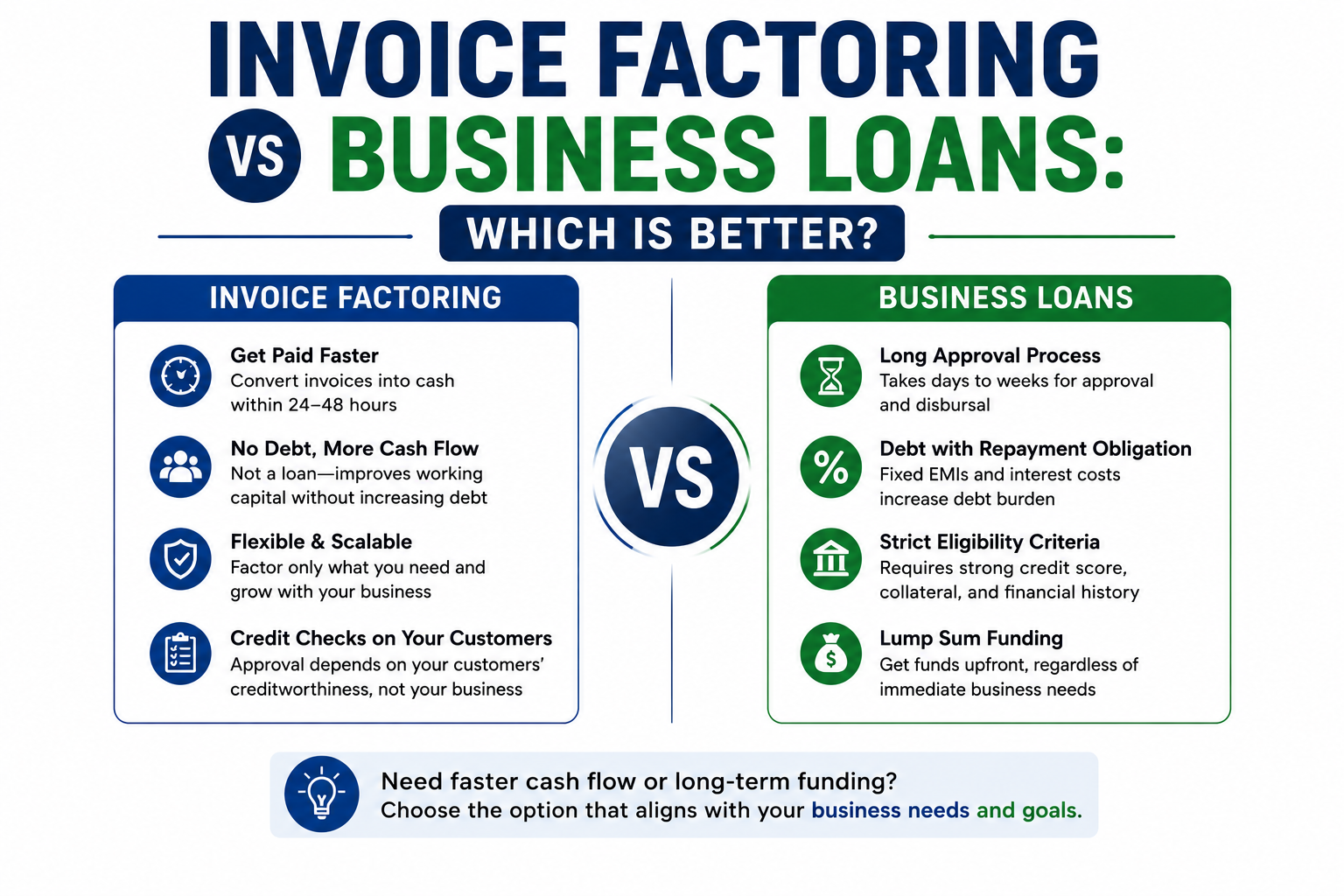
Invoice Factoring vs Business Loans: Which Is Better...
Compare Invoice Factoring vs Business Loans based on approval time, cash flow, flexibility, costs, and funding options. Find out which financing solution is best for your business needs.

Empowering MSMEs through innovative supply chain finance solutions and helping them manage their cash flows efficiently.



Domestic Factoring is a widely used financial tool that allows businesses to convert your outstanding invoices into immediate cash. By selling your unpaid invoices to a factoring company, businesses can access instant funds that can be used for various purposes such as meeting operating expenses, expanding operations, or purchasing inventory. This solution not only improves cash flow but also helps businesses maintain consistent operations and invest in future growth opportunities without the worry of delayed payments. Get instant cash by turning unpaid invoices into funds with domestic factoring.
Domestic Factoring-Get instant cash by turning unpaid invoices into funds with domestic factoring.
Managing finances effectively is crucial for achieving long-term financial stability. At SBI Factor, we provide a comprehensive debt management program tailored to help you regain control of your financial health. Our solutions are designed to reduce your debt burden while maintaining a strategic approach to help you stay financially secure. By working closely with you, we ensure that your debt management plan is realistic, achievable, and keeps you on the path to financial independence and success. Get instant cash by turning unpaid invoices into funds with domestic factoring.
Comprehensive Debt Management-Regain control of your finances with SBI Factor tailored debt management solutions for lasting stability.


Welcome to the SBI Factors Blog, where we share insights and information on factoring services and your many benefits for businesses. Our posts are designed to help you understand how factoring can improve cash flow, support growth, and simplify financial management. Whether you're an SME or a large corporation, our blog provides valuable tips and updates to help you make informed financial decisions.
Compare Invoice Factoring vs Business Loans based on approval time, cash flow, flexibility, costs, and funding options. Find out which financing solution is best for your business needs.
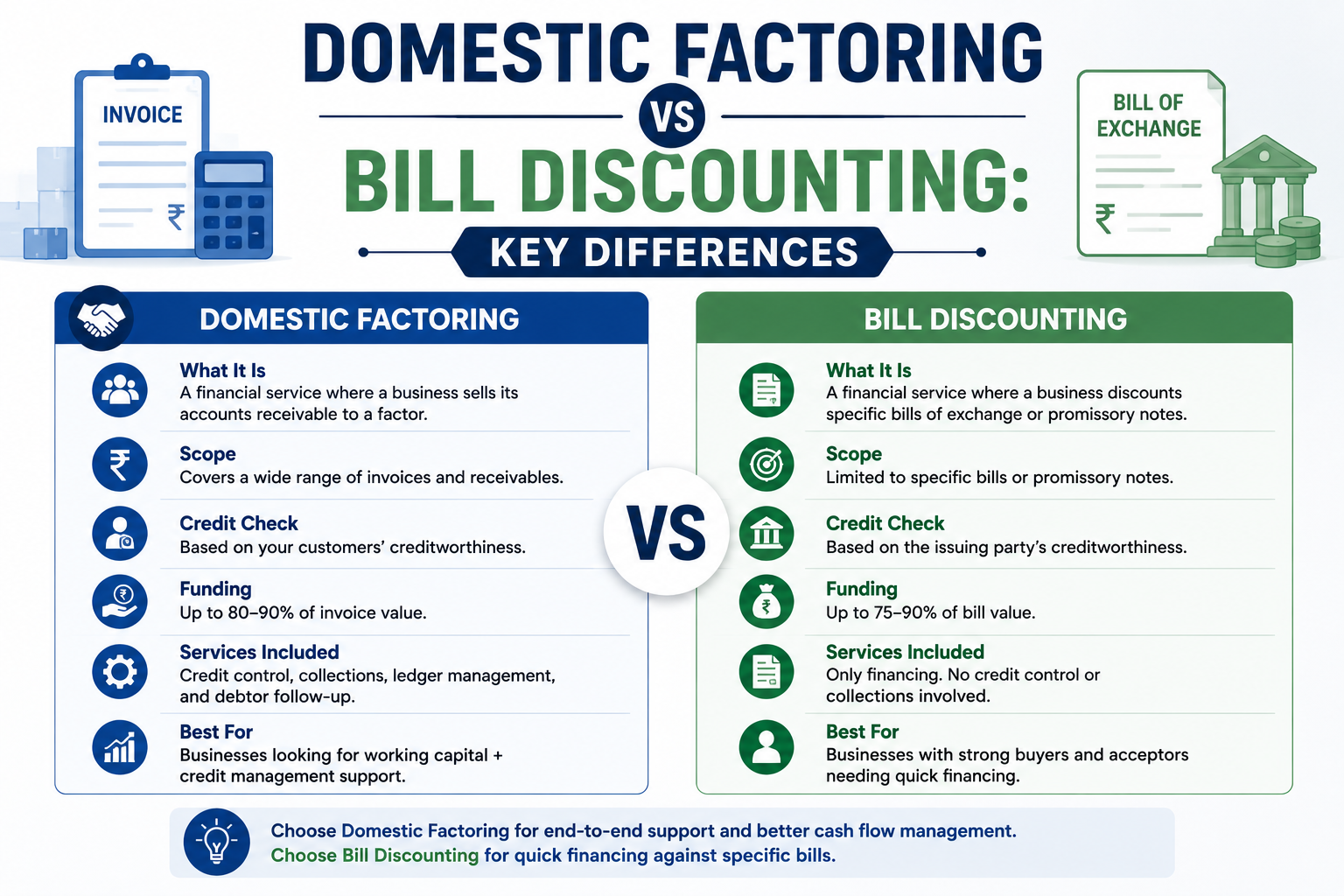
Compare Domestic Factoring vs Bill Discounting and understand the key differences in funding, credit management, cash flow, risk, and business use cases to choose the right financing solution.
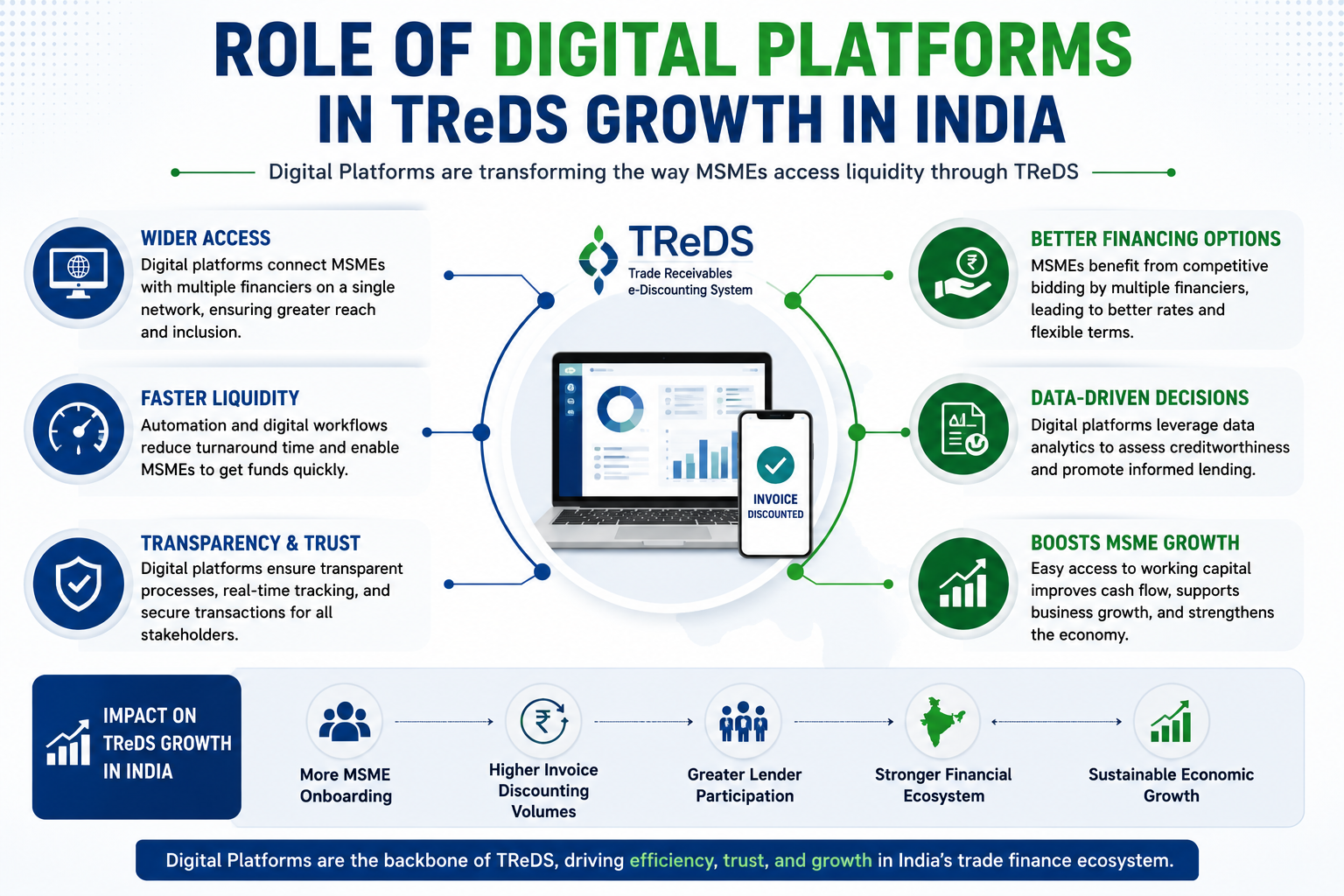
Learn how digital platforms are accelerating TReDS growth in India by improving MSME financing, enabling faster invoice discounting, increasing transparency, and simplifying access to working capital.

Understanding Vendor Factoring Vendor factoring or accounts receivable factoring or debt factoring is a modern financing tool developed for suppliers confronting protracted payment terms. At the heart of it, it is the selling of accounts receivables106, to a third-party (factor). This structure gives suppliers ready access to funds on their invoices without having to endure the typical waiting for days or weeks (or in extreme cases, 30 to 90 days/several months or more, depending on the industry and agreements in place).

One of the most important fiscal tools used by business realities to manage their cash overflows, bill discounting, and tab discounting is salutary. Bill discounting is the process where a business proprietor gets immediate access to finances from banks or NBFCs by dealing its overdue bills to them at a reduction. This permits plutocrats to enter the company straight down, rather than in the event the sale term is complete. On the contrary, tab discounting is a form of short-term borrowing in which a business uses its receivables as collateral for the mileage of a loan from a fiscal institution.

Factoring is a shadowy corner of commercial finance but an important piece for businesses seeking to enrich their balance sheet and improve their fiscal position. Factoring has multiple purposes and appears in several forms; it is a solution to frequent financial issues. Mapping out the various areas of factoring allows firms to determine whether it is an effective financial instrument for their needs.

Factoring is a fiscal tool used to help businesses with their cash inflow through the selling of checks at a price blinking rate called a party- factor. This allows companies to get paid right down, rather of staying for their guests to do so. In this post, we'll learn about what Factoring is & its types, how factoring works and the benefits it has to offer especially when fastening on India based factoring companies & services.

Cash Credit Meaning Cash credit is a short-term loan provided by banks to meet the working capital requirements of businesses. This flexible financing option allows businesses to withdraw cash even when there is no balance, up to an agreed limit. Cash credit offers businesses the flexibility to withdraw cash using a credit card, even with no balance, up to the credit limit. Interest is charged only on the amount withdrawn, not on the entire credit limit. Applying for Cash Credit is one of the best financing strategies to ensure stability, growth and efficient use of resources.

Receivables are one of the more complex aspects of business finance. They represent potential future cash flow and serve as collateral to maintain a company's liquidity and overall financial health. But what exactly are receivables, and why are they essential for businesses? In this blog post, we will explain what receivables are, why they are important, and how businesses can manage them effectively. We will also discuss best practices for ensuring timely payment and minimizing credit risk to improve your company's return on investment (ROI).

The reality is that often, to seize new opportunities or simply keep the business afloat during choppy seas - let alone kick on and take the business to another level - an entrepreneur will need extra capital. It is only partially helpful to know the various types of business loans and how they operate to decide how best to fund your internet business. In this post, we examine in further detail a few of the most popular kinds of company loans, including term loans, credit lines, receivables finance, and more.

The Different Types Of Factoring Factoring is an essential financial transaction where companies sell their accounts receivable to a factoring company, obtaining immediate capital. This process, often referred to as accounts receivable financing or invoice factoring, not only enhances working capital but also offers a strategic tool for managing credit risk and improving credit control.

It is essential to understand the monetary processes of Bill Discounting and Factoring to preserve the business's stability and growth. Bill Discounting and Factoring are distinguishing in their way, and they can be used for different reasons. Therefore, through this blog, I draw the difference between these two available strategies, considering business owners' intentions to follow their financial vision.

It can be difficult to navigate the complexity of international trade, and for firms, risk mitigation, and cash flow management are major obstacles. A potent remedy that provides a lifeline to businesses involved in cross-border operations is import and export factoring. Factoring services reduce the risks associated with credit limits and payment delays while providing the working capital required to drive your export sales by turning accounts receivable into instant cash.

Introduction In the current complex world of finance, solving the question of cash flows and financial stabilization is the ultimate challenge of any business . Reverse factoring is one of those solutions that are widely spoken about, and not solely as a buzzword, but as a real actual instrument for elevating liquidity levels and securing backing from the supply chain. This paper discusses the concept of reverse factoring, the way it operates, the amount of advantages it contains, and the application of a given type of financing to business conditions.

What is Non-Recourse Factoring? Businesses can use non-recourse factoring, a financial arrangement whereby they sell their accounts receivable to a factoring company, to assist manage their cash flow. Non-response calculating offers an additional level of protection from terrible obligations, as opposed to traditional money strategies. Under this arrangement, the factoring company takes on the loss if a client's customer is insolvent and fails to make payments, releasing the client from debt.

International factoring is an innovative financial solution designed to overcome this hurdle and fuel business growth. This comprehensive guide dives into the intricacies of international factoring, its benefits, and how it stacks up against other financing options, with the aim of helping you make informed decisions for your business.

Maintaining a business requires a consistent income to keep tasks chugging along as expected. At the point when clients don't pay their solicitations immediately, it can make a money crunch. Receipt limiting offers an answer by permitting you to transform your neglected solicitations into quick money. With this supporting choice, you can get assets by involving your exceptional solicitations as a guarantee while the loan specialist charges a help expense.

The choice between cash credit or term credit remains one of the most closing intersections for money managers and business visionaries in the consistently influencing universe of business support. The superiority of one financial tool over the other depends on various factors, such as the type of business; the goal of taking out the loan; financial situation; and the ability to repay the debt. Both these avenues come with their challenges and benefits and cater to varying financial needs from managing short-term working capital to securing funds for sizeable long-term investment projects. However, knowing the difference between loan and cash credit may help you find a strategy that will ensure your business success and financial health.

Introduction to Working Capital Management The ability to manage your company's cash effectively-particularly through working capital management-can be the difference between thriving and merely surviving. In simple terms, working capital refers to the difference between a company's current assets, like cash, accounts receivable, and inventories of raw materials and finished goods, and its current liabilities, such as accounts payable. Effective management of these components ensures that a business can maintain its operations and fulfill both short-term obligations and future strategic goals. In this blog, we'll explore why working capital management is crucial and provide strategies to help your business stay financially stable.

Receivables Financing: A Lifeline for Growing Businesses Understanding the Basics of Receivables Financing Receivables financing, also known as accounts receivable financing, is a financial arrangement where a business sells its outstanding invoices to a third party, typically a financier or a bank, at a discount. This process allows the business to receive immediate cash instead of waiting for the payment terms of the invoices to be fulfilled. Essentially, it converts accounts receivable into working capital, providing a steady cash flow to meet operational needs.

For MSME (Micro, Small, and Medium Enterprises) units, managing working capital effectively is crucial for business growth. Delays in receiving payments from debtors can impact cash flow, creating operational challenges. Two popular financing solutions that address this issue are factoring and bill discounting. In this blog, we will explore these financial tools, their differences, types, and benefits, helping MSMEs manage cash flow efficiently.

What is Factoring in Finance? Factoring in finance refers to a financial transaction where a business sells its accounts receivable (unpaid invoices) to a third party, known as a factor, at a discounted rate. The factor provides immediate cash to the business, enabling it to meet short-term financial needs and maintain operational liquidity.

Understanding Supply Chain Finance: A Comprehensive Guide

What Is a Letter of Credit (LC)? A Letter of Credit (LC) is a financial instrument issued by a bank or financial institution that guarantees payment to a seller or exporter in a trade transaction, provided the terms and conditions of the agreement are met. It is commonly used in international trade to reduce risk, offering assurance to both buyers and sellers.

Businesses often face cash flow challenges while waiting for customers to settle their invoices. Factoring provides a practical solution by allowing businesses to access immediate funds by selling their accounts receivables. Among the various factoring options available, recourse factoring and non-recourse factoring stand out as two key types. Understanding their differences, benefits, and applications can help businesses make informed financial decisions.

It is very hard for businesses to manage their cash flow especially when customers delays invoice payment. One such option is account receivable factoring which is a powerful financial solution that aids businesses in ensuring a consistent cash flow by trading outstanding invoices for instant cash. SBI Factors also provides factoring receivables services; thus, a business can have your operational expense covered even if the customer is late on payment.

Maintaining a steady cash flow is essential for businesses to operate smoothly. However, delayed payments from customers can create financial stress. Factoring finance is a practical solution that helps businesses convert their unpaid invoices into immediate cash. This method ensures businesses have the working capital they need to cover daily expenses and growth opportunities.

Managing cash flow is critical for any business's health. One creative way to enhance liquidity and increase supplier relationships is reverse factoring. This blog explains reverse factoring, its benefits, and how SBI Factors supports businesses through this financial service.

Prompt cash flow forms the foundation on which the operations of businesses (particularly for Micro, Small, Medium Enterprises - MSMEs) are built upon. Trade Receivables Discounting System (TReDS) | TReDS platform is at the forefront of ensuring timely payments and liquidity for MSMEs. This blog will educate you about the TReDS concept, its advantages, part played by SBI Factors in nurturing businesses through this platform.

Cash flow management is crucial in the field of international commerce and finance, and cross-border corporations regularly look for techniques to manage risk and gain in cash. These challenges are addressed by two financial instruments, factoring and forfaiting. In this blog, we are going to discuss the difference between factoring and forfaiting, the meaning and how they align with SBI Factor's services.

Understand the difference between TReDS and traditional factoring. Find out which financing option suits your business best with insights from SBI Factors Limited.

Avoid costly errors in factoring financial services. Discover common pitfalls and the right types of factoring, from domestic to export factoring services, for optimal business growth

Struggling to choose between recourse and non-recourse factoring? Learn the key differences, pros & cons, and which option works best for your business's cash flow needs

Get immediate cash flow with Letter of Credit (LC) bill discounting. Learn the process, benefits, and how bill discounting platforms can accelerate your payments.

Learn how small exporters use bill discounting to get immediate cash for invoices, improve liquidity, and grow their international trade business.

Quickly grasp Letter of Credit (LC) bill discounting. Understand the process, benefits, and how bill discounting platforms provide instant cash flow for your business.

Get immediate cash flow with recourse factoring! Learn how this option works for small business owners, its benefits, and how it compares to non-recourse and reverse factoring.

Learn how factoring in finance works as a smart working capital solution. See how invoice factoring helps improve cash flow, cut debt, and support business growth.

Explore how export factoring helps Indian companies expand globally. Learn the benefits of import and export factoring, cash flow solutions, and the role of leading export factoring companies in India.

Learn how factoring helps MSMEs in India improve cash flow, reduce financial risks, and expand business. Discover invoice factoring benefits and working capital solutions for small and medium enterprises.

Learn the importance of credit discipline and early warning signals in factoring. Discover how businesses can manage risks, maintain cash flow, and optimize invoice factoring.

Compare Letter of Credit (LC) discounting and traditional financing. Learn which option offers better cash flow, lower risk, and flexibility for your business.

Managing working capital efficiently is critical for any business to stay competitive, ensure growth, and meet day-to-day financial needs. One of the most widely used tools for short-term financing in India is the Cash Credit (CC) facility. While businesses often secure a cash credit limit from banks or financial institutions, not all of them use it effectively.

Understand the key differences between reverse factoring and traditional factoring. Learn how each works, their advantages, and which option is better for your business with SBI Factors.

Explore the cash credit facility for MSMEs, including eligibility criteria, benefits, interest rates, and hidden costs. Cash credit helps small businesses manage working capital, improve cash flow, and fund day-to-day operations with flexibility.

Learn how reverse factoring in supply chain finance improves cash flow, supports suppliers, and strengthens working capital. SBI Factors offers trusted reverse factoring services in India for business growth.

Learn how AI and data analytics make TReDS faster, safer, and more reliable. See how smart receivables help MSMEs, buyers, and financiers manage cash flow better.

Learn how paperless financing and digital TReDS platforms help MSMEs get faster payments, reduce paperwork, and improve cash flow. Powered by SBI Factors.

Large corporate buyers are increasingly asking their vendors (suppliers) to join digital invoice financing platforms. One of the most important systems that supports this shift is the digital Trade Receivables Discounting System (TReDS) platform

TReDS (Trade Receivables Discounting System) is a digital platform that allows MSMEs to get early payment for approved invoices raised on large corporates or government buyers.

Factoring services in India help businesses manage delayed payments by converting approved receivables into immediate cash. Under RBI-regulated frameworks, solutions like TReDS, export factoring, and reverse factoring provide faster liquidity without relying on traditional working capital loans

Invoice financing is a practical cash flow solution that allows businesses to unlock money tied up in unpaid invoices. Instead of waiting weeks or months for customer payments, companies can receive funds almost immediately.

treds-export-reverse-factoring-indian-businesses
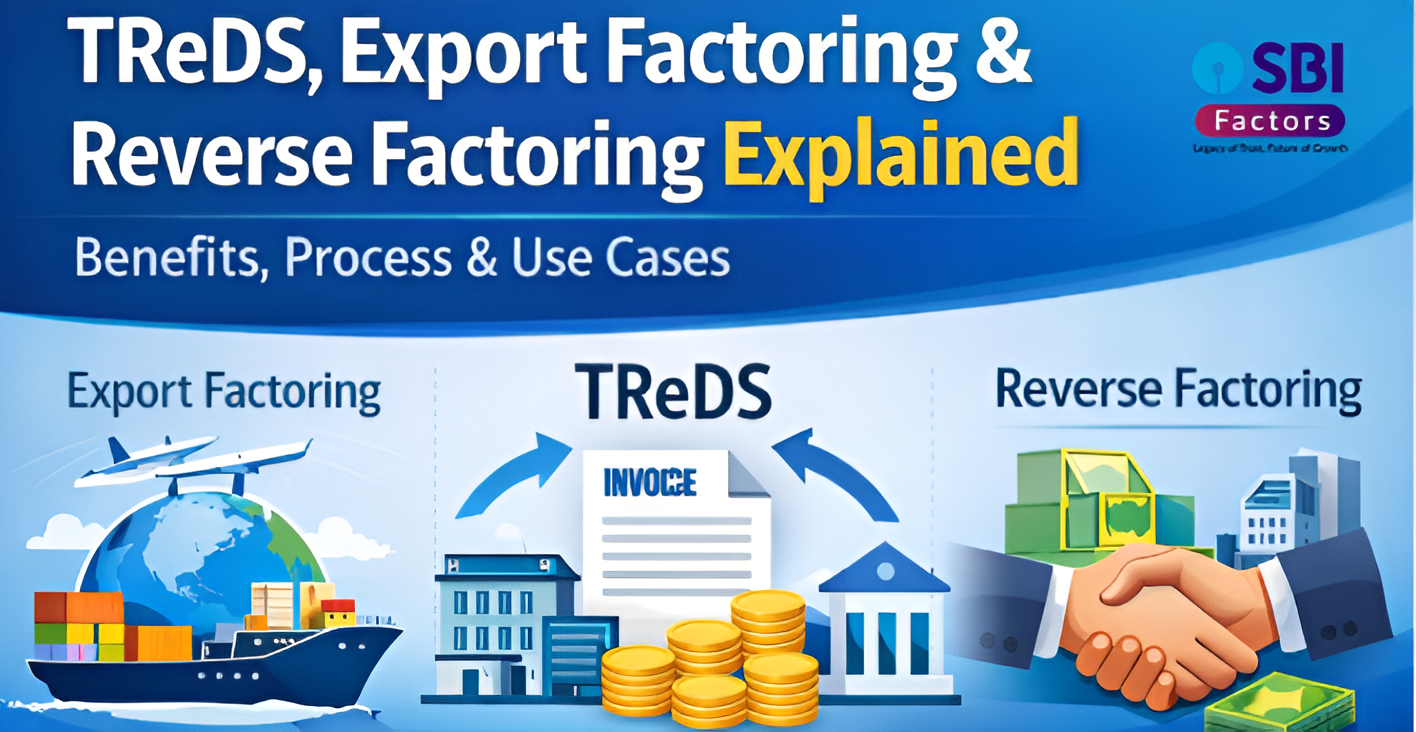
Learn how TReDS, export factoring, and reverse factoring help MSMEs, exporters, and corporates unlock faster cash flow. Explore benefits, process, and real-world use cases.
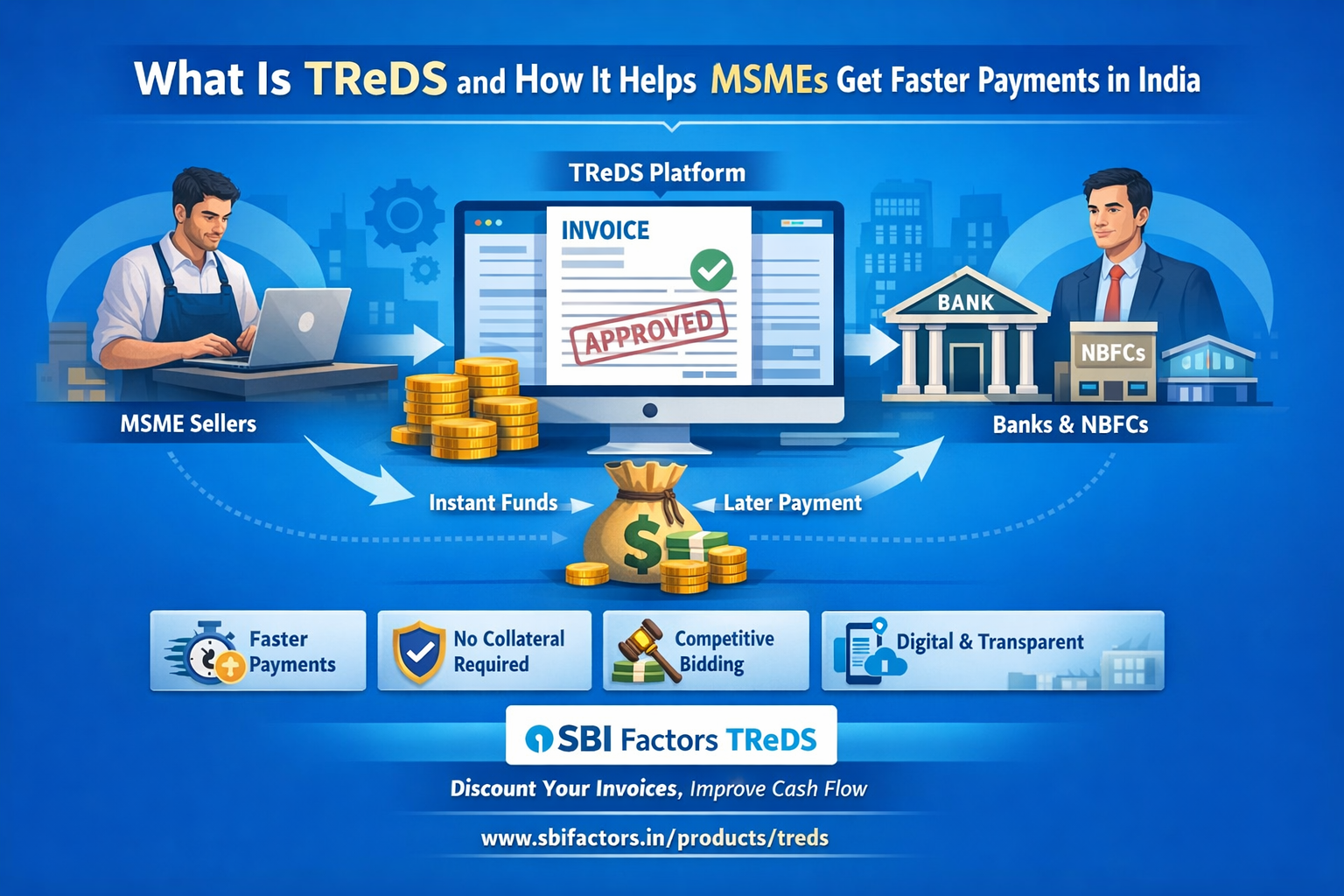
Learn what TReDS is, how it works, and how MSMEs in India can use the Trade Receivables Discounting System to get faster payments and improve cash flow.
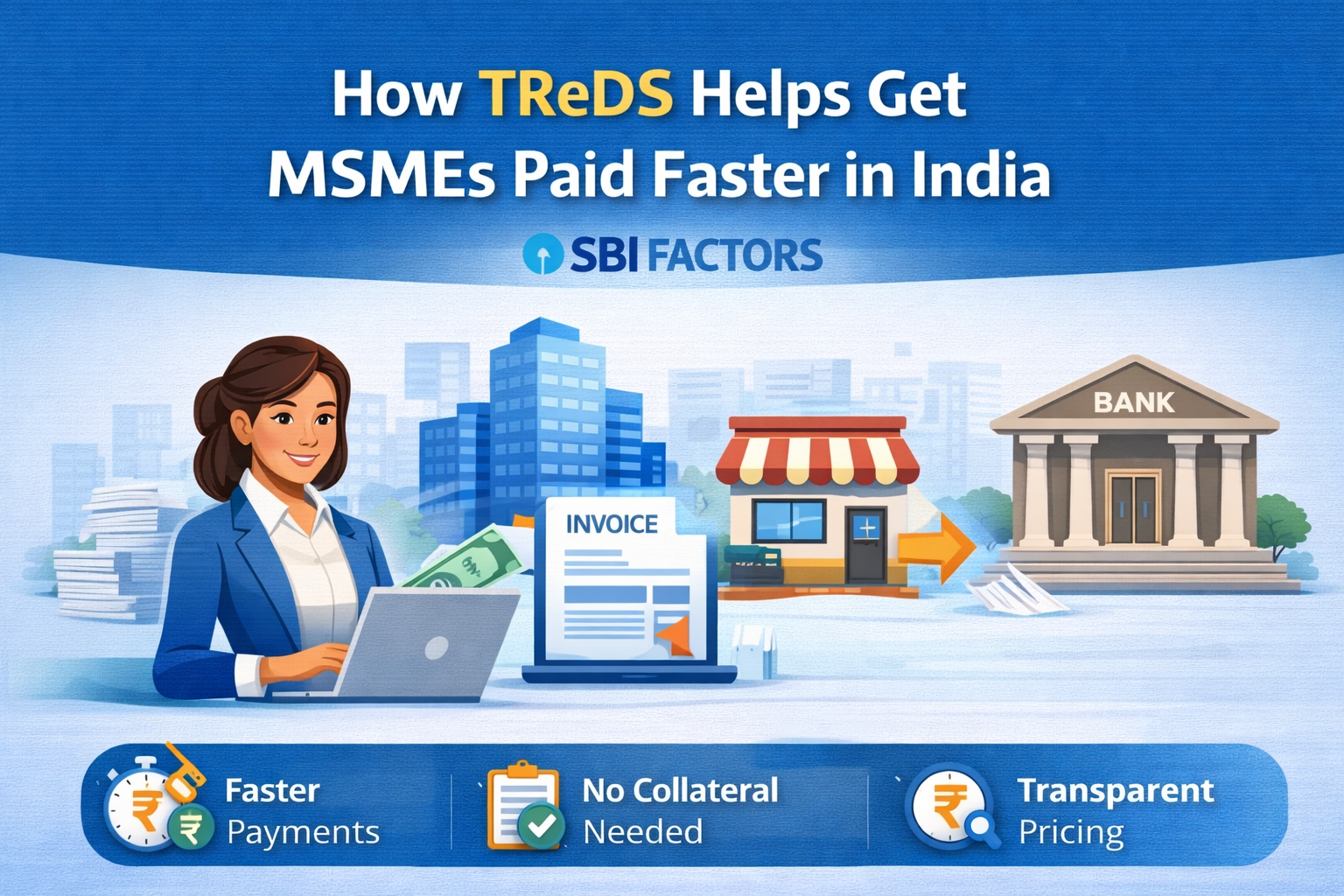
Learn how RBI’s new digital finance norms are shaping the TReDS ecosystem, improving MSME invoice financing, boosting transparency, and enhancing working capital.
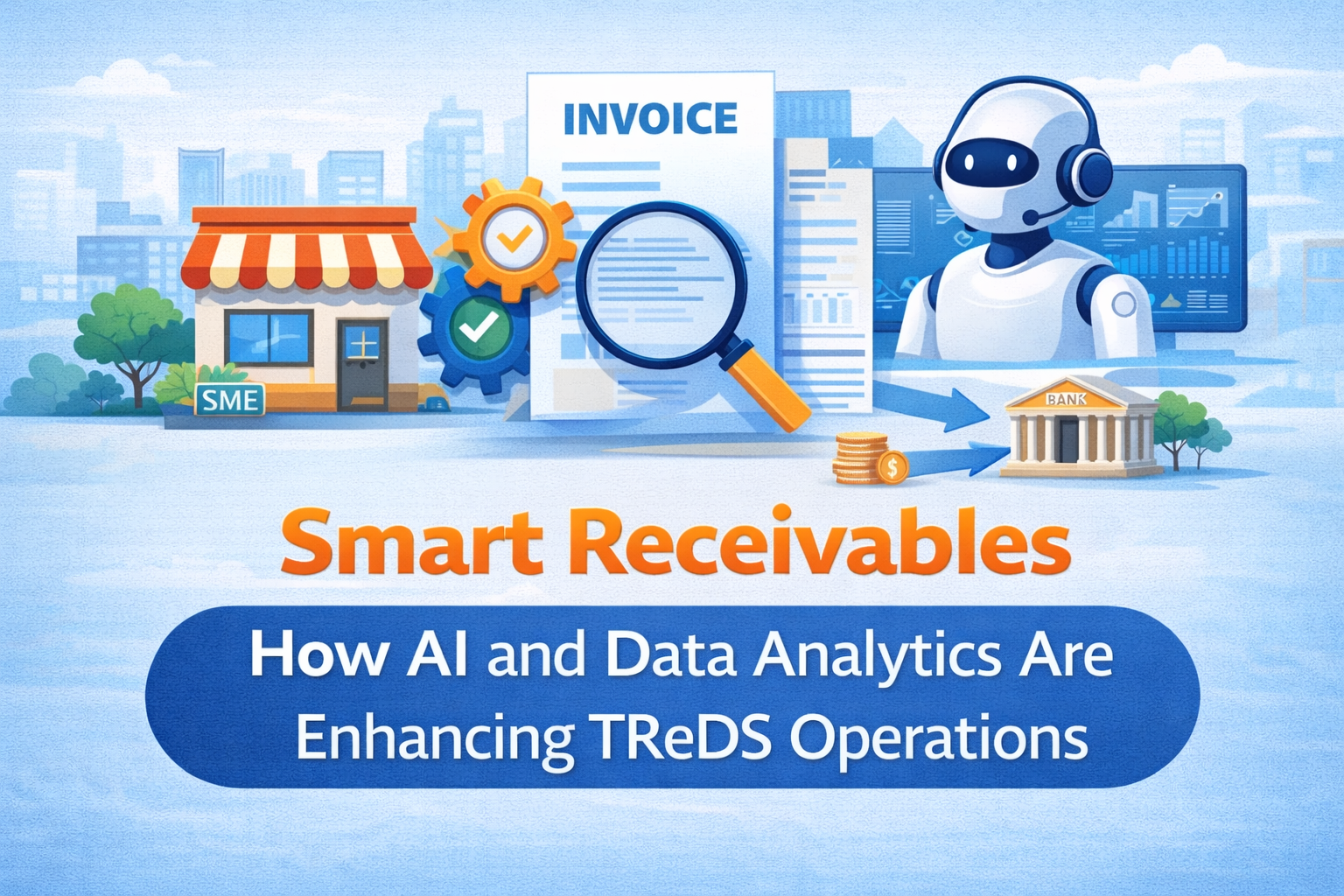
Learn how AI and data analytics make TReDS faster, safer, and more reliable. See how smart receivables help MSMEs, buyers, and financiers manage cash flow better.
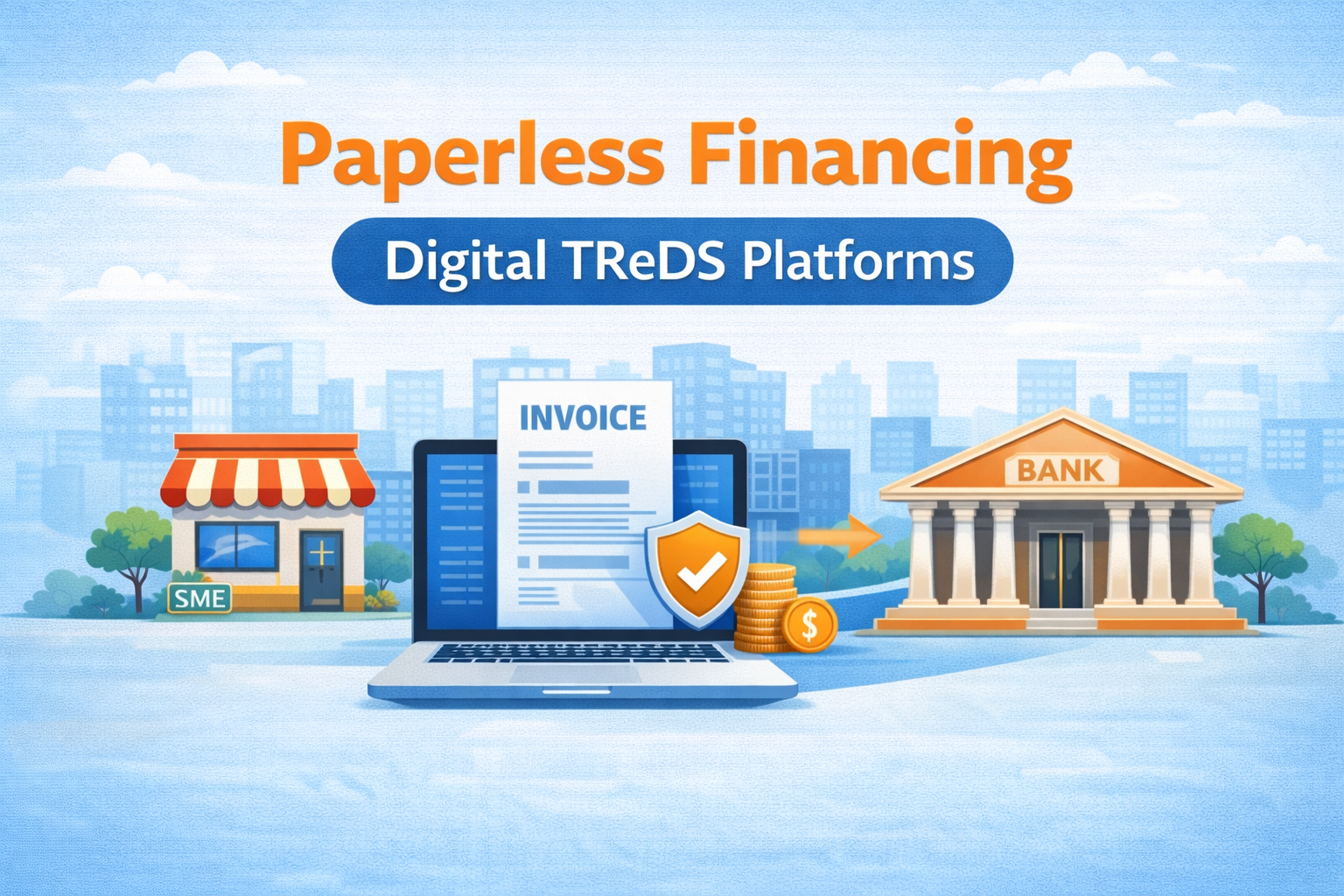
Learn how paperless financing and digital TReDS platforms help MSMEs get faster payments, reduce paperwork, and improve cash flow. Powered by SBI Factors.
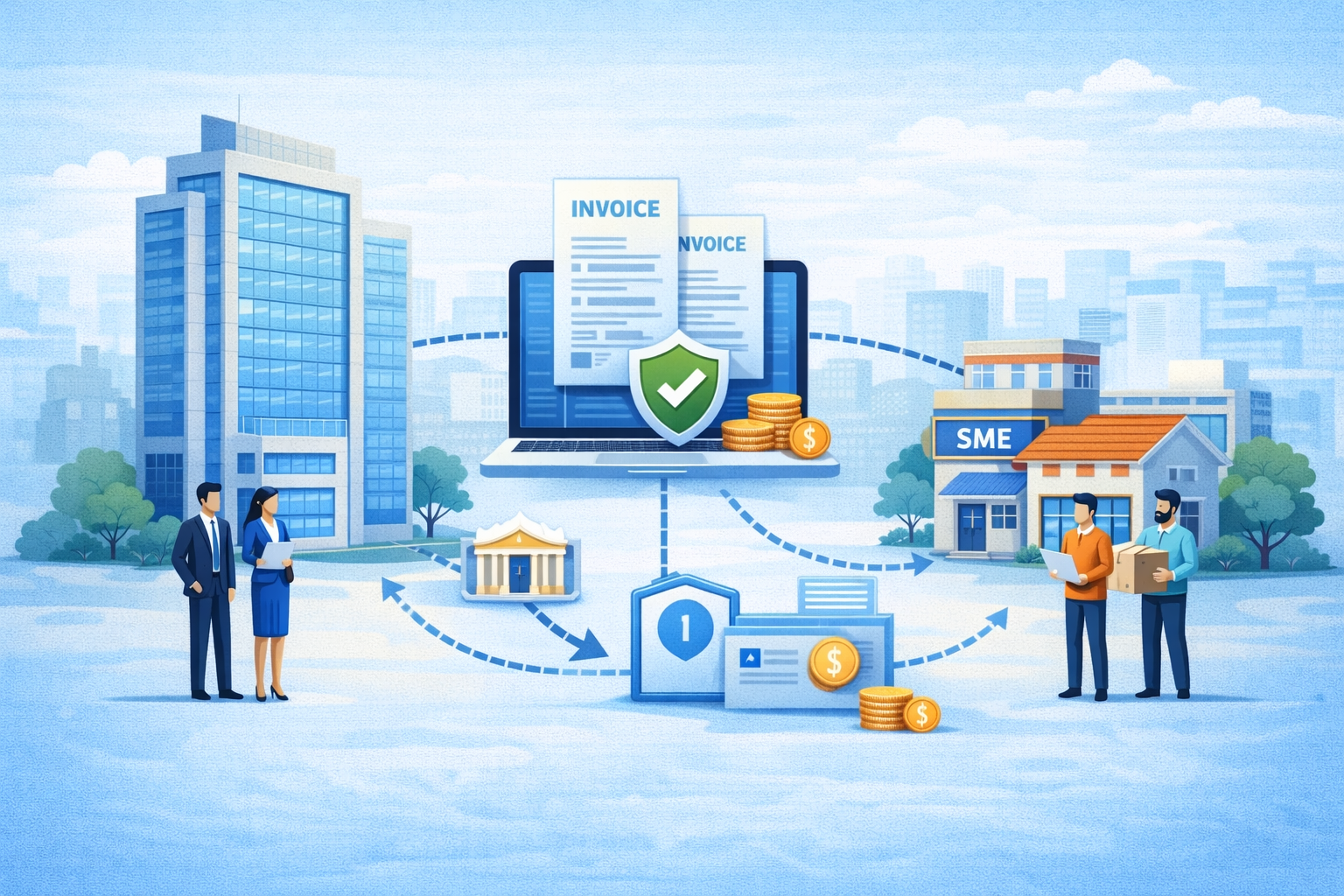
Large corporate buyers are increasingly asking their vendors (suppliers) to join digital invoice financing platforms. One of the most important systems that supports this shift is the digital Trade Receivables Discounting System (TReDS) platform.
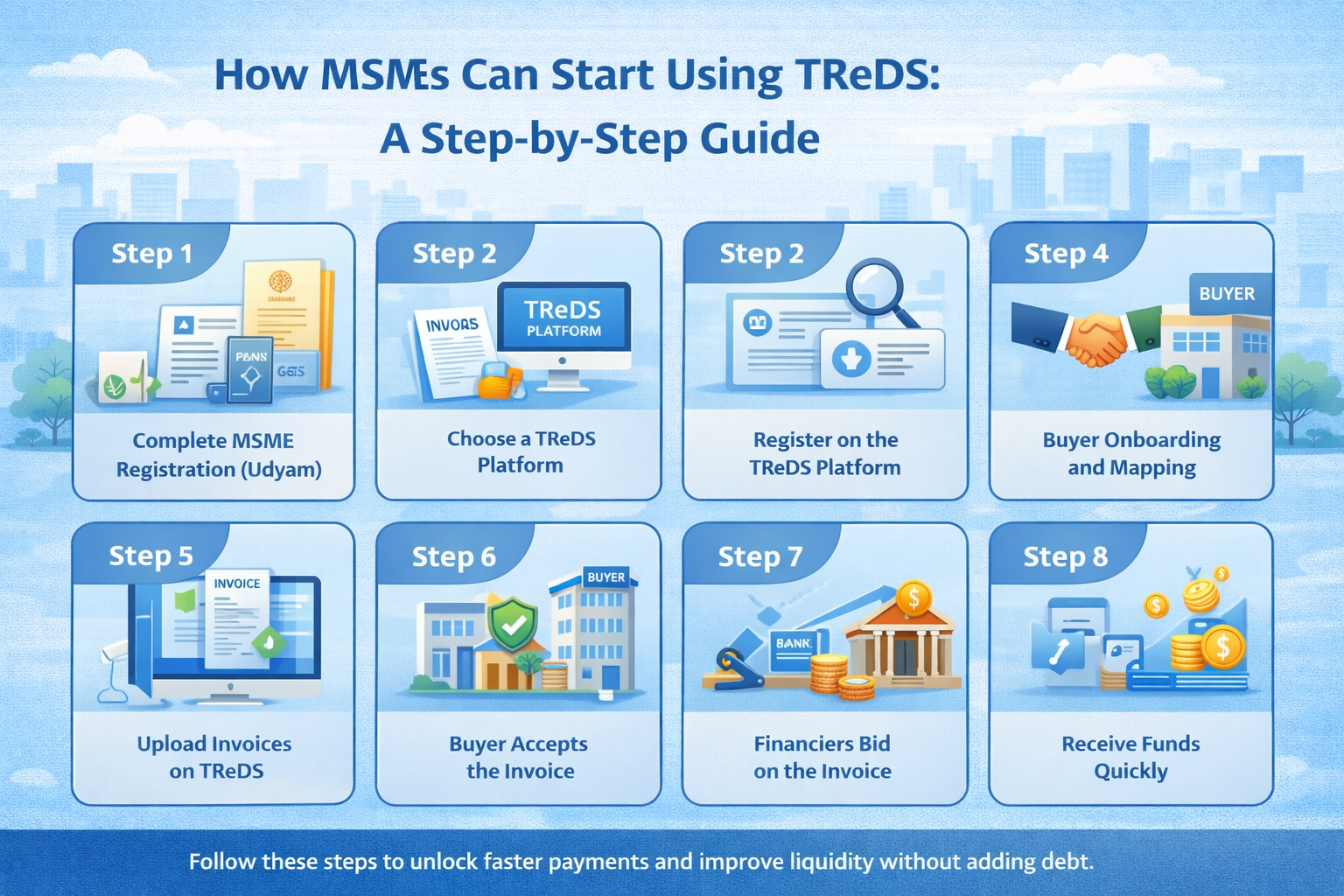
Learn how MSMEs can register, upload invoices, and get faster payments using TReDS platforms in India with this step-by-step guide.
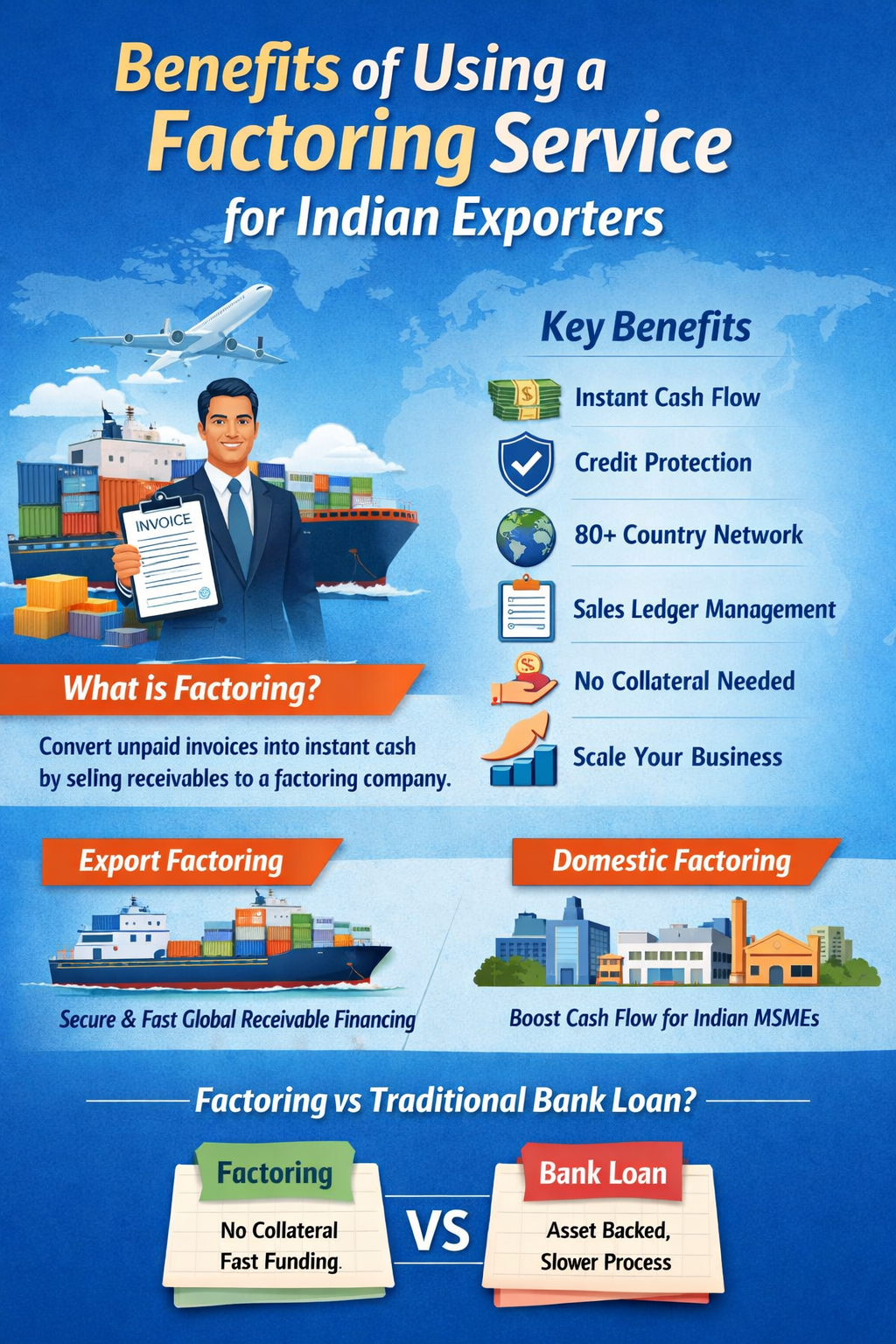
Discover how SBI Factors' export and domestic factoring services help Indian exporters and MSMEs unlock instant working capital, reduce credit risk, and scale faster.
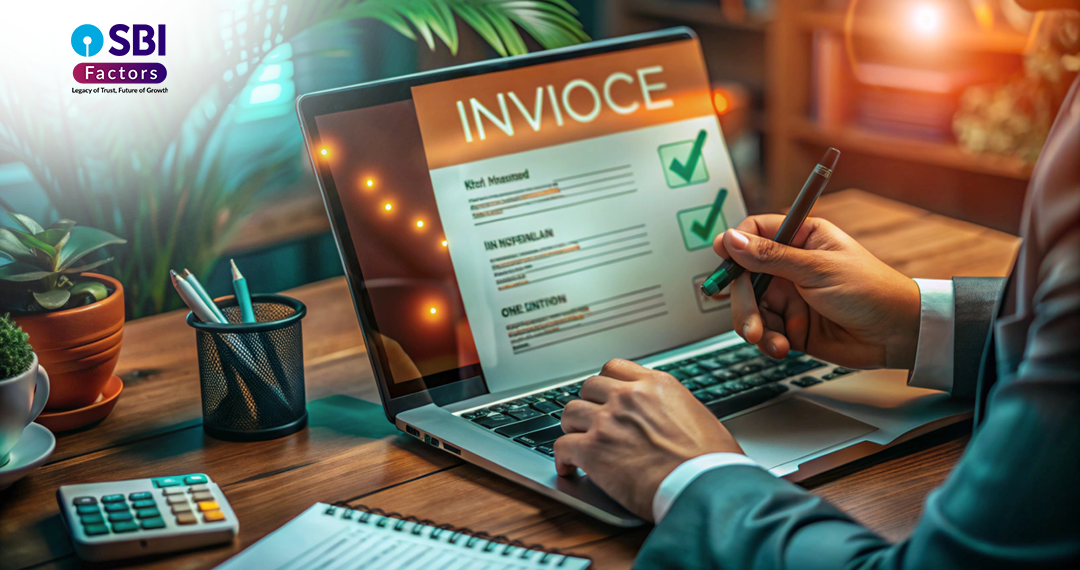
Learn how MSMEs can use TReDS for invoice financing with this step-by-step guide. Improve cash flow, get funds in 48 hours, and reduce credit risk.
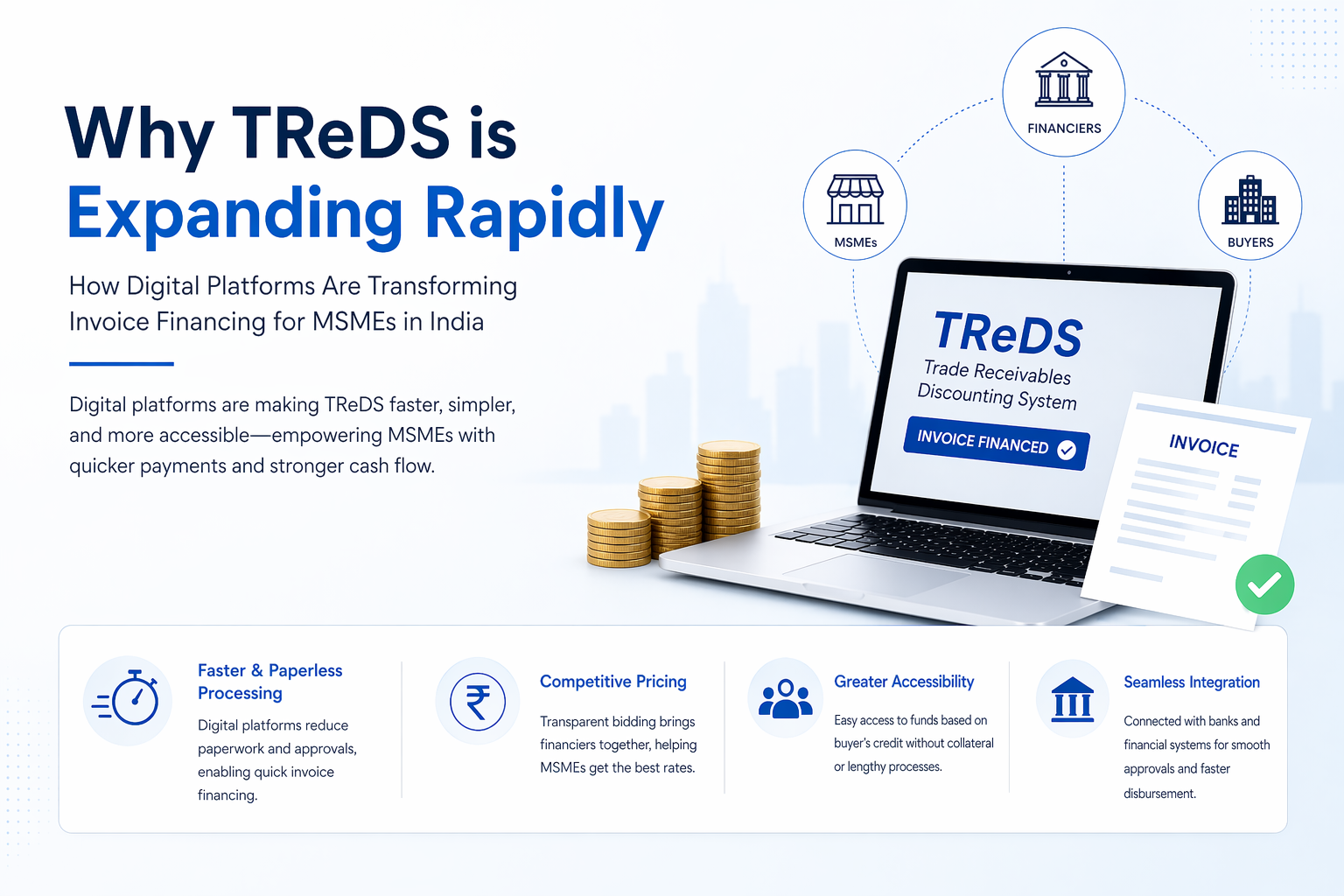
TReDS in India is growing rapidly as digital platforms enable faster invoice financing, better cash flow, and easy access for MSMEs.
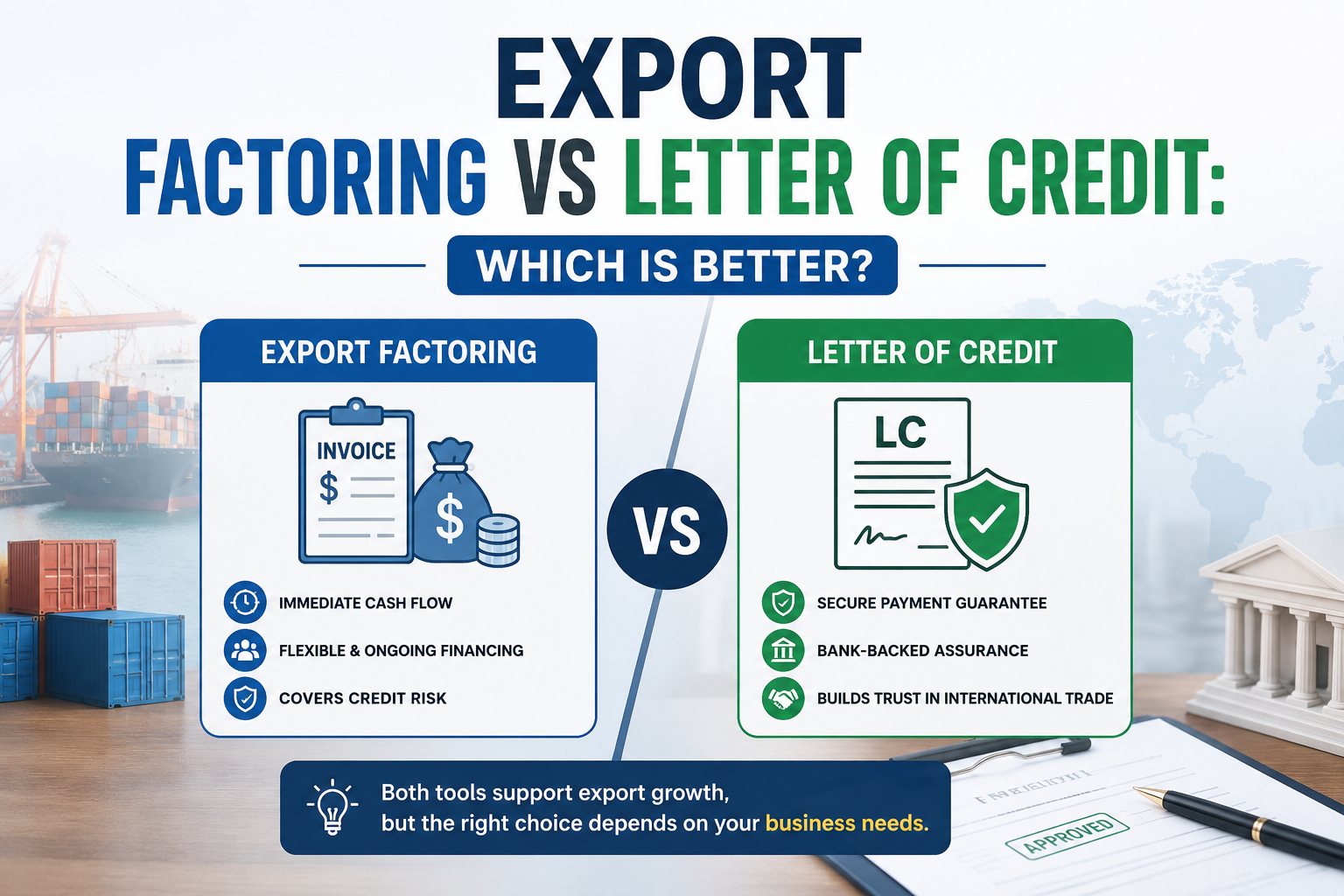
Confused between Export Factoring and Letter of Credit? Compare costs, payment security, cash flow benefits, risks, and use cases to choose the best export finance solution for your business.
Compare Invoice Factoring vs Business Loans based on approval time, cash flow, flexibility, costs, and funding options. Find out which financing solution is best for your business needs.
Compare Domestic Factoring vs Bill Discounting and understand the key differences in funding, credit management, cash flow, risk, and business use cases to choose the right financing solution.
Learn how digital platforms are accelerating TReDS growth in India by improving MSME financing, enabling faster invoice discounting, increasing transparency, and simplifying access to working capital.
Understanding Vendor Factoring Vendor factoring or accounts receivable factoring or debt factoring is a modern financing tool developed for suppliers confronting protracted payment terms. At the heart of it, it is the selling of accounts receivables106, to a third-party (factor). This structure gives suppliers ready access to funds on their invoices without having to endure the typical waiting for days or weeks (or in extreme cases, 30 to 90 days/several months or more, depending on the industry and agreements in place).
One of the most important fiscal tools used by business realities to manage their cash overflows, bill discounting, and tab discounting is salutary. Bill discounting is the process where a business proprietor gets immediate access to finances from banks or NBFCs by dealing its overdue bills to them at a reduction. This permits plutocrats to enter the company straight down, rather than in the event the sale term is complete. On the contrary, tab discounting is a form of short-term borrowing in which a business uses its receivables as collateral for the mileage of a loan from a fiscal institution.
Factoring is a shadowy corner of commercial finance but an important piece for businesses seeking to enrich their balance sheet and improve their fiscal position. Factoring has multiple purposes and appears in several forms; it is a solution to frequent financial issues. Mapping out the various areas of factoring allows firms to determine whether it is an effective financial instrument for their needs.
Factoring is a fiscal tool used to help businesses with their cash inflow through the selling of checks at a price blinking rate called a party- factor. This allows companies to get paid right down, rather of staying for their guests to do so. In this post, we'll learn about what Factoring is & its types, how factoring works and the benefits it has to offer especially when fastening on India based factoring companies & services.
Cash Credit Meaning Cash credit is a short-term loan provided by banks to meet the working capital requirements of businesses. This flexible financing option allows businesses to withdraw cash even when there is no balance, up to an agreed limit. Cash credit offers businesses the flexibility to withdraw cash using a credit card, even with no balance, up to the credit limit. Interest is charged only on the amount withdrawn, not on the entire credit limit. Applying for Cash Credit is one of the best financing strategies to ensure stability, growth and efficient use of resources.
Receivables are one of the more complex aspects of business finance. They represent potential future cash flow and serve as collateral to maintain a company's liquidity and overall financial health. But what exactly are receivables, and why are they essential for businesses? In this blog post, we will explain what receivables are, why they are important, and how businesses can manage them effectively. We will also discuss best practices for ensuring timely payment and minimizing credit risk to improve your company's return on investment (ROI).
The reality is that often, to seize new opportunities or simply keep the business afloat during choppy seas - let alone kick on and take the business to another level - an entrepreneur will need extra capital. It is only partially helpful to know the various types of business loans and how they operate to decide how best to fund your internet business. In this post, we examine in further detail a few of the most popular kinds of company loans, including term loans, credit lines, receivables finance, and more.
The Different Types Of Factoring Factoring is an essential financial transaction where companies sell their accounts receivable to a factoring company, obtaining immediate capital. This process, often referred to as accounts receivable financing or invoice factoring, not only enhances working capital but also offers a strategic tool for managing credit risk and improving credit control.
It is essential to understand the monetary processes of Bill Discounting and Factoring to preserve the business's stability and growth. Bill Discounting and Factoring are distinguishing in their way, and they can be used for different reasons. Therefore, through this blog, I draw the difference between these two available strategies, considering business owners' intentions to follow their financial vision.
It can be difficult to navigate the complexity of international trade, and for firms, risk mitigation, and cash flow management are major obstacles. A potent remedy that provides a lifeline to businesses involved in cross-border operations is import and export factoring. Factoring services reduce the risks associated with credit limits and payment delays while providing the working capital required to drive your export sales by turning accounts receivable into instant cash.
Introduction In the current complex world of finance, solving the question of cash flows and financial stabilization is the ultimate challenge of any business . Reverse factoring is one of those solutions that are widely spoken about, and not solely as a buzzword, but as a real actual instrument for elevating liquidity levels and securing backing from the supply chain. This paper discusses the concept of reverse factoring, the way it operates, the amount of advantages it contains, and the application of a given type of financing to business conditions.
What is Non-Recourse Factoring? Businesses can use non-recourse factoring, a financial arrangement whereby they sell their accounts receivable to a factoring company, to assist manage their cash flow. Non-response calculating offers an additional level of protection from terrible obligations, as opposed to traditional money strategies. Under this arrangement, the factoring company takes on the loss if a client's customer is insolvent and fails to make payments, releasing the client from debt.
International factoring is an innovative financial solution designed to overcome this hurdle and fuel business growth. This comprehensive guide dives into the intricacies of international factoring, its benefits, and how it stacks up against other financing options, with the aim of helping you make informed decisions for your business.
Maintaining a business requires a consistent income to keep tasks chugging along as expected. At the point when clients don't pay their solicitations immediately, it can make a money crunch. Receipt limiting offers an answer by permitting you to transform your neglected solicitations into quick money. With this supporting choice, you can get assets by involving your exceptional solicitations as a guarantee while the loan specialist charges a help expense.
The choice between cash credit or term credit remains one of the most closing intersections for money managers and business visionaries in the consistently influencing universe of business support. The superiority of one financial tool over the other depends on various factors, such as the type of business; the goal of taking out the loan; financial situation; and the ability to repay the debt. Both these avenues come with their challenges and benefits and cater to varying financial needs from managing short-term working capital to securing funds for sizeable long-term investment projects. However, knowing the difference between loan and cash credit may help you find a strategy that will ensure your business success and financial health.
Introduction to Working Capital Management The ability to manage your company's cash effectively-particularly through working capital management-can be the difference between thriving and merely surviving. In simple terms, working capital refers to the difference between a company's current assets, like cash, accounts receivable, and inventories of raw materials and finished goods, and its current liabilities, such as accounts payable. Effective management of these components ensures that a business can maintain its operations and fulfill both short-term obligations and future strategic goals. In this blog, we'll explore why working capital management is crucial and provide strategies to help your business stay financially stable.
Receivables Financing: A Lifeline for Growing Businesses Understanding the Basics of Receivables Financing Receivables financing, also known as accounts receivable financing, is a financial arrangement where a business sells its outstanding invoices to a third party, typically a financier or a bank, at a discount. This process allows the business to receive immediate cash instead of waiting for the payment terms of the invoices to be fulfilled. Essentially, it converts accounts receivable into working capital, providing a steady cash flow to meet operational needs.
For MSME (Micro, Small, and Medium Enterprises) units, managing working capital effectively is crucial for business growth. Delays in receiving payments from debtors can impact cash flow, creating operational challenges. Two popular financing solutions that address this issue are factoring and bill discounting. In this blog, we will explore these financial tools, their differences, types, and benefits, helping MSMEs manage cash flow efficiently.
What is Factoring in Finance? Factoring in finance refers to a financial transaction where a business sells its accounts receivable (unpaid invoices) to a third party, known as a factor, at a discounted rate. The factor provides immediate cash to the business, enabling it to meet short-term financial needs and maintain operational liquidity.
Understanding Supply Chain Finance: A Comprehensive Guide
What Is a Letter of Credit (LC)? A Letter of Credit (LC) is a financial instrument issued by a bank or financial institution that guarantees payment to a seller or exporter in a trade transaction, provided the terms and conditions of the agreement are met. It is commonly used in international trade to reduce risk, offering assurance to both buyers and sellers.
Businesses often face cash flow challenges while waiting for customers to settle their invoices. Factoring provides a practical solution by allowing businesses to access immediate funds by selling their accounts receivables. Among the various factoring options available, recourse factoring and non-recourse factoring stand out as two key types. Understanding their differences, benefits, and applications can help businesses make informed financial decisions.
It is very hard for businesses to manage their cash flow especially when customers delays invoice payment. One such option is account receivable factoring which is a powerful financial solution that aids businesses in ensuring a consistent cash flow by trading outstanding invoices for instant cash. SBI Factors also provides factoring receivables services; thus, a business can have your operational expense covered even if the customer is late on payment.
Maintaining a steady cash flow is essential for businesses to operate smoothly. However, delayed payments from customers can create financial stress. Factoring finance is a practical solution that helps businesses convert their unpaid invoices into immediate cash. This method ensures businesses have the working capital they need to cover daily expenses and growth opportunities.
Managing cash flow is critical for any business's health. One creative way to enhance liquidity and increase supplier relationships is reverse factoring. This blog explains reverse factoring, its benefits, and how SBI Factors supports businesses through this financial service.
Prompt cash flow forms the foundation on which the operations of businesses (particularly for Micro, Small, Medium Enterprises - MSMEs) are built upon. Trade Receivables Discounting System (TReDS) | TReDS platform is at the forefront of ensuring timely payments and liquidity for MSMEs. This blog will educate you about the TReDS concept, its advantages, part played by SBI Factors in nurturing businesses through this platform.
Cash flow management is crucial in the field of international commerce and finance, and cross-border corporations regularly look for techniques to manage risk and gain in cash. These challenges are addressed by two financial instruments, factoring and forfaiting. In this blog, we are going to discuss the difference between factoring and forfaiting, the meaning and how they align with SBI Factor's services.
Understand the difference between TReDS and traditional factoring. Find out which financing option suits your business best with insights from SBI Factors Limited.
Avoid costly errors in factoring financial services. Discover common pitfalls and the right types of factoring, from domestic to export factoring services, for optimal business growth
Struggling to choose between recourse and non-recourse factoring? Learn the key differences, pros & cons, and which option works best for your business's cash flow needs
Get immediate cash flow with Letter of Credit (LC) bill discounting. Learn the process, benefits, and how bill discounting platforms can accelerate your payments.
Learn how small exporters use bill discounting to get immediate cash for invoices, improve liquidity, and grow their international trade business.
Quickly grasp Letter of Credit (LC) bill discounting. Understand the process, benefits, and how bill discounting platforms provide instant cash flow for your business.
Get immediate cash flow with recourse factoring! Learn how this option works for small business owners, its benefits, and how it compares to non-recourse and reverse factoring.
Learn how factoring in finance works as a smart working capital solution. See how invoice factoring helps improve cash flow, cut debt, and support business growth.
Explore how export factoring helps Indian companies expand globally. Learn the benefits of import and export factoring, cash flow solutions, and the role of leading export factoring companies in India.
Learn how factoring helps MSMEs in India improve cash flow, reduce financial risks, and expand business. Discover invoice factoring benefits and working capital solutions for small and medium enterprises.
Learn the importance of credit discipline and early warning signals in factoring. Discover how businesses can manage risks, maintain cash flow, and optimize invoice factoring.
Compare Letter of Credit (LC) discounting and traditional financing. Learn which option offers better cash flow, lower risk, and flexibility for your business.
Managing working capital efficiently is critical for any business to stay competitive, ensure growth, and meet day-to-day financial needs. One of the most widely used tools for short-term financing in India is the Cash Credit (CC) facility. While businesses often secure a cash credit limit from banks or financial institutions, not all of them use it effectively.
Understand the key differences between reverse factoring and traditional factoring. Learn how each works, their advantages, and which option is better for your business with SBI Factors.
Explore the cash credit facility for MSMEs, including eligibility criteria, benefits, interest rates, and hidden costs. Cash credit helps small businesses manage working capital, improve cash flow, and fund day-to-day operations with flexibility.
Learn how reverse factoring in supply chain finance improves cash flow, supports suppliers, and strengthens working capital. SBI Factors offers trusted reverse factoring services in India for business growth.
Learn how AI and data analytics make TReDS faster, safer, and more reliable. See how smart receivables help MSMEs, buyers, and financiers manage cash flow better.
Learn how paperless financing and digital TReDS platforms help MSMEs get faster payments, reduce paperwork, and improve cash flow. Powered by SBI Factors.
Large corporate buyers are increasingly asking their vendors (suppliers) to join digital invoice financing platforms. One of the most important systems that supports this shift is the digital Trade Receivables Discounting System (TReDS) platform
TReDS (Trade Receivables Discounting System) is a digital platform that allows MSMEs to get early payment for approved invoices raised on large corporates or government buyers.
Factoring services in India help businesses manage delayed payments by converting approved receivables into immediate cash. Under RBI-regulated frameworks, solutions like TReDS, export factoring, and reverse factoring provide faster liquidity without relying on traditional working capital loans
Invoice financing is a practical cash flow solution that allows businesses to unlock money tied up in unpaid invoices. Instead of waiting weeks or months for customer payments, companies can receive funds almost immediately.
treds-export-reverse-factoring-indian-businesses
Learn how TReDS, export factoring, and reverse factoring help MSMEs, exporters, and corporates unlock faster cash flow. Explore benefits, process, and real-world use cases.
Learn what TReDS is, how it works, and how MSMEs in India can use the Trade Receivables Discounting System to get faster payments and improve cash flow.
Learn how RBI’s new digital finance norms are shaping the TReDS ecosystem, improving MSME invoice financing, boosting transparency, and enhancing working capital.
Learn how AI and data analytics make TReDS faster, safer, and more reliable. See how smart receivables help MSMEs, buyers, and financiers manage cash flow better.
Learn how paperless financing and digital TReDS platforms help MSMEs get faster payments, reduce paperwork, and improve cash flow. Powered by SBI Factors.
Large corporate buyers are increasingly asking their vendors (suppliers) to join digital invoice financing platforms. One of the most important systems that supports this shift is the digital Trade Receivables Discounting System (TReDS) platform.
Learn how MSMEs can register, upload invoices, and get faster payments using TReDS platforms in India with this step-by-step guide.
Discover how SBI Factors' export and domestic factoring services help Indian exporters and MSMEs unlock instant working capital, reduce credit risk, and scale faster.
Learn how MSMEs can use TReDS for invoice financing with this step-by-step guide. Improve cash flow, get funds in 48 hours, and reduce credit risk.
TReDS in India is growing rapidly as digital platforms enable faster invoice financing, better cash flow, and easy access for MSMEs.
Confused between Export Factoring and Letter of Credit? Compare costs, payment security, cash flow benefits, risks, and use cases to choose the best export finance solution for your business.
Compare Invoice Factoring vs Business Loans based on approval time, cash flow, flexibility, costs, and funding options. Find out which financing solution is best for your business needs.
Compare Domestic Factoring vs Bill Discounting and understand the key differences in funding, credit management, cash flow, risk, and business use cases to choose the right financing solution.
Learn how digital platforms are accelerating TReDS growth in India by improving MSME financing, enabling faster invoice discounting, increasing transparency, and simplifying access to working capital.